

Access Denied! Decoding the Doorkeeper in Kafka's Parable of the Law
We dive into Franz Kafka's Parable of the Law from The Trial, and its continued capacity to break minds
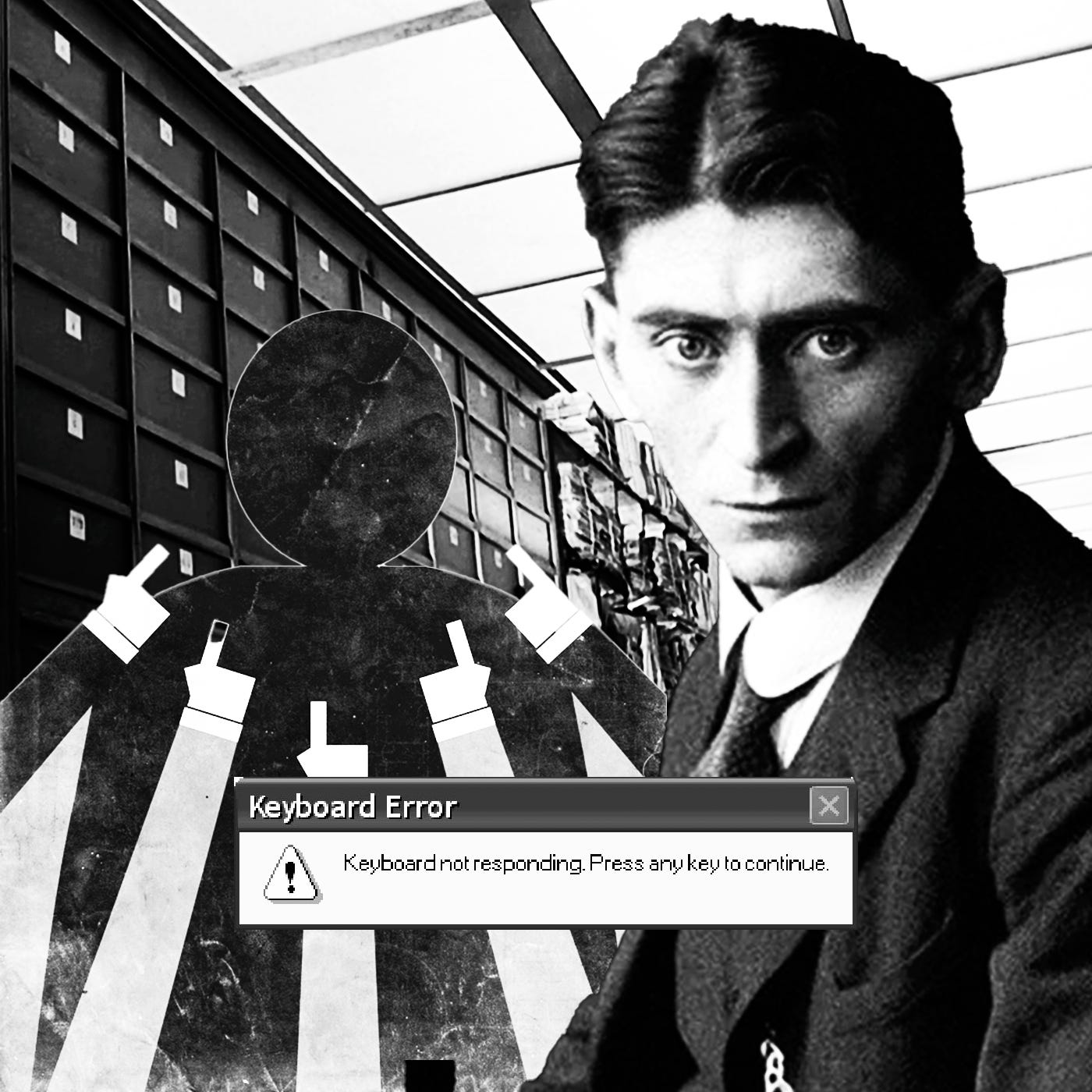
If you’ve ever spent a soul-punishing afternoon at the Department of Motor Vehicles, or stared at a jury summons wondering if the universe has finally decided to indict you for breathing too loudly, then Franz Kafka’s The Trial is your autobiography, ghostwritten by a Czech insurance clerk with a grudge against reality. And nestled inside that nightmare like a splinter is the Parable of the Law, a tiny story that punches way above its weight class.
It’s the kind of tale that makes you laugh, weep, and then spend the next decade trying to figure out what you read. In late 2025, as we navigate our own labyrinths of algorithms and endless Zoom tribunals, this parable endures and multiplies, turning every closed door into a personal apocalypse.
To understand why, we need to back up to the man himself; Kafka was forged in the slow-cooker of early 20th-century Prague, a city that felt like the Austro-Hungarian Empire’s cranky uncle, multi-ethnic, multilingual, and perpetually on the verge of a family feud. Born in 1883 to a middle-class Jewish family that spoke German in a sea of Czech speakers, Franz grew up in the shadow of his overbearing father, Hermann, a haberdasher whose idea of affection was a letter that doubled as a psychological flaying. Young Franz studied law at the German University in Prague, not out of passion but because it was a respectable path for a Jew in an empire where assimilation was the polite word for survival. By day, he toiled as a clerk at the Workers’ Accident Insurance Institute, drafting reports on mangled limbs and bureaucratic red tape, work that sounds like a punchline until you realize it was his muse.
But the man was a mess inside. By the time he sat down to write The Trial in 1914, Kafka was already unraveling. Prague in those years was a pressure cooker: World War I had just erupted, turning Europe into a meat grinder, though Kafka, exempt from the draft due to his fragile health, stayed put in his family’s apartment on the Old Town Square. The city buzzed with ethnic tensions: Germans lording it over Czechs, Jews caught in the crossfire, Zionism stirring like a pot about to boil over. Culturally, it was a hothouse of expressionism and psychoanalysis, with Freud’s couch just a train ride away in Vienna, whispering about repressed urges while Kafka chain-smoked and jotted notes on napkins. His mind was a personal battlefield, with chronic insomnia, migraines that felt like sledgehammers to the skull, and a hypochondria so vivid he once convinced himself his tuberculosis was merely the overflow of a deeper mental flood. He was engaged three times but bolted each time, terrified of domesticity, and his letters to lovers read like confessions from a man who’d already been tried and convicted by his own conscience. Writing The Trial wasn’t therapy; it was exorcism, dashed off in a feverish burst between July and September 1914, then abandoned like so many of his works, which were unfinished and unpublished in his lifetime, left to his friend Max Brod with instructions to burn the lot. Brod ignored him to our benefit and to our perplexity.
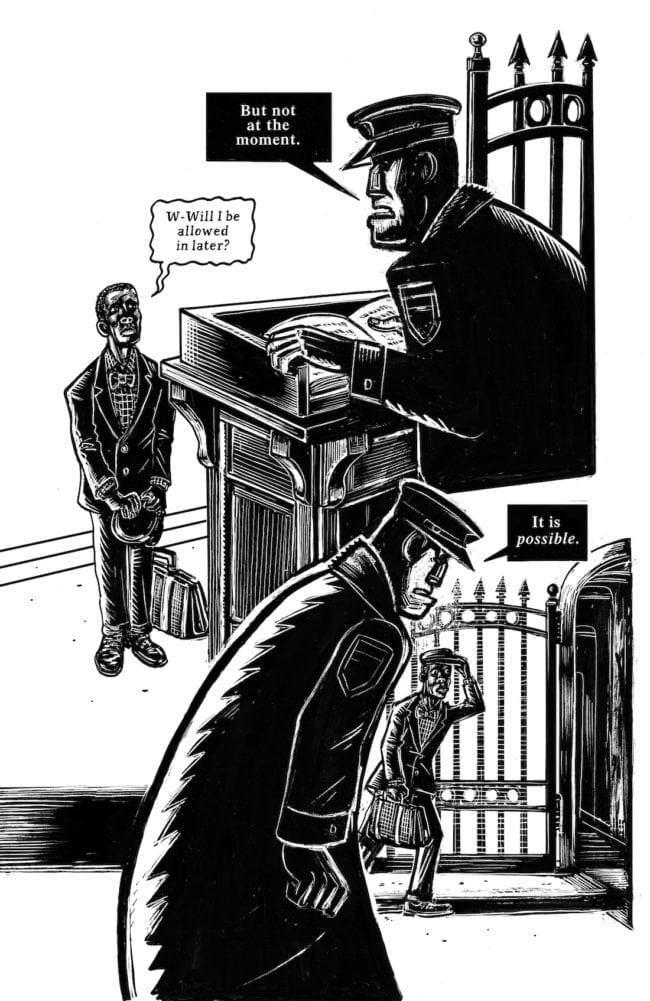
The Trial (Der Prozess in the original German) unfolds like a bad dream you can’t wake from. Our hero, Josef K., a thirty-year-old bank procurator, wakes up one morning to find two goons in his boarding house, announcing his arrest. No charges, no handcuffs, no dramatic perp walk, just vague mutterings about a court he can’t see and officials who treat justice like a game of hot potato. K. is free to go about his days, but the shadow of the law clings to him like damp fog. He attends hearings in crumbling attics, schmoozes with leering lawyers and predatory mistresses of court functionaries, and spirals into a vortex of absurdity where every step forward is a trapdoor to deeper confusion. The novel builds to a grotesque climax: after a year of futile wrangling, K. is fetched by two men in top hats, taken to a quarry, and executed with a kitchen knife, murmuring, “Like a dog!” It’s not a whodunit; it’s a what-the-hell-is-happening.
And then, in Chapter Nine (the Cathedral chapter, because nothing says “spiritual crisis” like a Gothic pile of stone) a priest corners K. during a business errand and launches into the Parable of the Law. It’s a story within the story, a microcosm of the macro-madness, and Kafka delivers it with the deadpan precision of a hangman adjusting the noose. Here’s the full thing, because why paraphrase genius?
Before the Law stands a doorkeeper on guard. To this doorkeeper there comes a man from the country who begs for admittance to the Law. But the doorkeeper says that he cannot admit the man at the moment. The man, on reflection, asks if he will be allowed, then, to enter later. ‘It is possible,’ answers the doorkeeper, ‘but not at this moment.’ Since the door leading into the Law stands open as usual and the doorkeeper steps to one side, the man bends down to peer through the entrance. When the doorkeeper sees that, he laughs and says: ‘If you are so strongly tempted, try to get in without my permission. But note that I am powerful. And I am only the lowest doorkeeper. From hall to hall keepers stand at every door, one more powerful than the other. Even the third of these has an aspect that even I cannot bear to look at.’ These are difficulties which the man from the country has not expected to meet, the Law, he thinks, should be accessible to every man and at all times, but when he looks more closely at the doorkeeper in his furred robe, with his huge pointed nose and long, thin, Tartar beard, he decides that he had better wait until he gets permission to enter.
The doorkeeper gives him a stool and lets him sit down at the side of the door. There he sits waiting for days and years. He makes many attempts to be allowed in and wearies the doorkeeper with his importunity. The doorkeeper often engages him in brief conversation, asking him about his home and about other matters, but the questions are put quite impersonally, as great men put questions, and always conclude with the statement that the man cannot be allowed to enter yet.
The man, who has equipped himself with many things for his journey, parts with all he has, however valuable, in the hope of bribing the doorkeeper. The doorkeeper accepts it all, saying, however, as he takes each gift: ‘I take this only to keep you from feeling that you have left something undone.’ During all these long years the man watches the doorkeeper almost incessantly. He forgets about the other doorkeepers, and this one seems to him the only barrier between himself and the Law. In the first years he curses his evil fate aloud; later, as he grows old, he only mutters to himself. He grows childish, and since in his prolonged watch he has learned to know even the fleas in the doorkeeper’s fur collar, he begs the very fleas to help him and to persuade the doorkeeper to change his mind.
Finally his eyes grow dim and he does not know whether the world is really darkening around him or whether his eyes are only deceiving him. But in the darkness he can now perceive a radiance that streams immortally from the door of the Law. Now his life is drawing to a close. Before he dies, all that he has experienced during the whole time of his sojourn condenses in his mind into one question, which he has never yet put to the doorkeeper.
He beckons the doorkeeper, since he can no longer raise his stiffening body. The doorkeeper has to bend far down to hear him, for the difference in size between them has increased very much to the man’s disadvantage. ‘What do you want to know now?’ asks the doorkeeper, ‘you are insatiable.’ ‘Everyone strives to attain the Law,’ answers the man, ‘how does it come about, then, that in all these years no one has come seeking admittance but me?’
The doorkeeper perceives that the man is at the end of his strength and that his hearing is failing, so he bellows in his ear: ‘No one but you could gain admittance through this door, since this door was intended only for you. I am now going to shut it.’ “
“So the doorkeeper deluded the man,” said K. immediately, strongly attracted by the story.
“Don’t be too hasty,” said the priest, “don’t take over an opinion without testing it. I have told you the story in the very words of the scriptures. There’s no mention of delusion in it.”
“But it’s clear enough,” said K., “and your first interpretation of it was quite right. The doorkeeper gave the message of salvation to the man only when it could no longer help him.”
“He was not asked the question any earlier,” said the priest, “and you must consider, too, that he was only a doorkeeper, and as such he fulfilled his duty.”
“What makes you think he fulfilled his duty?” asked K. “He didn’t fulfill it. His duty might have been to keep all strangers away, but this man, for whom the door was intended, should have been let in.”
“You have not enough respect for the written word and you are altering the story,” said the priest. “The story contains two important statements made by the doorkeeper about admission to the Law, one at the beginning, the other at the end. The first statement is: that he cannot admit the man at the moment, and the other is: that this door was intended only for the man. But there is no contradiction. The first statement, on the contrary, even implies the second.
One could almost say that in suggesting to the man the possibility of future admittance the doorkeeper is exceeding his duty. At that moment his apparent duty is only to refuse admittance, and indeed many commentators are surprised that the suggestion should be made at all, since the doorkeeper appears to be a precisian with a stern regard for duty. He does not once leave his post during these many years, and he does not shut the door until the very last minute; he is conscious of the importance of his office, for he says: ‘I am powerful’; he is respectful to his superiors, for he says: ‘I am only the lowest doorkeeper’; he is not garrulous, for during all these years he puts only what are called ‘impersonal questions’; he is not to be bribed, for he says in accepting a gift: ‘I take this only to keep you from feeling that you have left something undone’; where his duty is concerned he is to be moved neither by pity nor rage, for we are told that the man ‘wearied the doorkeeper with his importunity’; and finally even his external appearance hints at a pedantic character, the large, pointed nose and the long, thin, black Tartar beard. Could one imagine a more faithful doorkeeper? Yet the doorkeeper has other elements in his character which are likely to advantage anyone seeking admittance and which make it comprehensible enough that he should somewhat exceed his duty in suggesting the possibility of future admittance.
For it cannot be denied that he is a little simple-minded and consequently a little conceited. Take the statements he makes about his power and the power of the other doorkeepers and their dreadful aspect which even he cannot bear to see--I hold that these statements may be true enough, but that the way in which he brings them out shows that his perceptions are confused by simpleness of mind and conceit. The commentators note in this connection: ‘The right perception of any matter and a misunderstanding of the same matter do not wholly exclude each other.’ One must at any rate assume that such simpleness and conceit, however sparingly indicated, are likely to weaken his defense of the door; they are breaches in the character of the doorkeeper.
To this must be added the fact that the doorkeeper seems to be a friendly creature by nature, he is by no means always on his official dignity. In the very first moments he allows himself the jest of inviting the man to enter in spite of the strictly maintained veto against entry; then he does not, for instance, send the man away, but gives him, as we are told, a stool and lets him sit down beside the door.
The patience with which he endures the man’s appeals during so many years, the brief conversations, the acceptance of the gifts, the politeness with which he allows the man to curse loudly in his presence the fate for which he himself is responsible--all this lets us deduce certain motions of sympathy. Not every doorkeeper would have acted thus.
And finally, in answer to a gesture of the man’s he stoops low down to give him the chance of putting a last question. Nothing but mild impatience--the doorkeeper knows that this is the end of it all--is discernible in the words: ‘You are insatiable.’ Some push this mode of interpretation even further and hold that these words express a kind of friendly admiration, though not without a hint of condescension. At any rate the figure of the doorkeeper can be said to come out very differently from what you fancied.”
“You have studied the story more exactly and for a longer time than I have,” said K. They were both silent for a little while. Then K. said: “So you think the man was not deluded?”
“Don’t misunderstand me,” said the priest, “I am only showing you the various opinions concerning that point. You must not pay too much attention to them. The scriptures are unalterable and the comments often enough merely express the commentator’s bewilderment. In this case there even exists an interpretation which claims that the deluded person is really the doorkeeper.”
“That’s a far-fetched interpretation,” said K. “On what is it based?”
“It is based,” answered the priest, “on the simple-mindedness of the doorkeeper. The argument is that he does not know the Law from inside, but he knows only the way that leads to it, where he patrols up and down. His ideas of the interior are assumed to be childish, and it is supposed that he himself is afraid of the other guardians whom he holds up as bogies before the man. Indeed, he fears them more than the man does, since the man is determined to enter after hearing about the dreadful guardians of the interior, while the doorkeeper has no desire to enter, at least not so far as we are told. Others again say that he must have been in the interior already, since he is after all engaged in the service of the Law and can only have been appointed from inside. This is countered by arguing that he may have been appointed by a voice calling from the interior, and that anyhow he cannot have been far inside, since the aspect of the third doorkeeper is more than he can endure. Moreover, no indication is given that all these years he ever made any remarks showing a knowledge of the interior except for the one remark about the doorkeepers. He may have been forbidden to do so, but there is no mention of that either. On these grounds the conclusion is reached that he knows nothing about the aspect and significance of the interior, so that he is in a state of delusion. But he is deceived also about his relation to the man from the country, for he is subject to the man and does not know it. He treats the man instead as his own subordinate, as can be recognized from many details that must still be fresh in your mind. But, according to this view of the story, it is just as clearly indicated that he is really subordinated to the man. In the first place, a bondman is always subject to a free man. Now the man from the country is really free, he can go where he likes, it is only the Law that is closed to him, and access to the Law is forbidden him only by one individual, the doorkeeper. When he sits down on the stool by the side of the door and stays there for the rest of his life, he does it of his own free will; in the story there is no mention of any compulsion. But the doorkeeper is bound to his post by his very office, he does not dare strike out into the country, nor apparently may he go into the interior of the Law’ even should he wish to. Besides, although he is in the service of the Law, his service is confined to this one entrance; that is to say, he serves only this man for whom alone the entrance is intended. On that ground too he is subject to the man. One must assume that for many years, for as long as it takes a man to grow up to the prime of life, his service was in a sense empty formality, since he had to wait for a man to come, that is to say, someone in the prime of life, and so had to wait a long time before the purpose of his service could be fulfilled, and, moreover, had to wait on the man’s pleasure, for the man came of his own free will. But the termination of his service also depends on the man’s term of life, so that to the very end he is subject to the man. And it is emphasized throughout that the doorkeeper apparently realizes nothing of all this. That is not in itself remarkable, since according to this interpretation the doorkeeper is deceived in a much more important issue, affecting his very office. At the end, for example, he says regarding the entrance to the Law: ‘I am now going to shut it,’ but at the beginning of the story we are told that the door leading into the Law stands always open, and if it stands open always, that is to say, at all times, without reference to the life or death of the man, then the doorkeeper is incapable of closing it. There is some difference of opinions about the motive behind the doorkeeper’s statement, whether he said he was going to close the door merely for the sake of giving an answer, or to emphasize his devotion to duty, or to bring the man into a state of grief and regret in his last moments. But there is no lack of agreement that the doorkeeper will not be able to shut the door. Many indeed profess to find that he is subordinate to the man even in wisdom, towards the end, at least, for the man sees the radiance that issues from the door of the Law while the doorkeeper in his official position must stand with his back to the door, nor does he say anything to show that he has perceived the change.”
“That is well argued,” said K., after repeating to himself in a low voice several passages from the priest’s exposition. “It is well argued, and I am inclined to agree that the doorkeeper is deluded. But that has not made me abandon my former opinion, since both conclusions are to some extent compatible. Whether the doorkeeper is clear-sighted or deluded does not dispose of the matter. I said the man is deluded. If the doorkeeper is clear-sighted, one might have doubts about that, but if the doorkeeper himself is deluded, then his delusion must of necessity be communicated to the man. That makes the doorkeeper not, indeed, a swindler, but a creature so simple-minded that he ought to be dismissed at once from his office. You mustn’t forget that the doorkeeper’s delusions do himself no harm but do infinite harm to the man.”
“There are objections to that,” said the priest. “Many aver that the story confers no right on anyone to pass judgment on the doorkeeper. Whatever he may seem to us, he is yet a servant of the Law; that is, he belongs to the Law and as such is set beyond human judgment. In that case one dare not believe that the doorkeeper is subordinate to the man. Bound as he is by his service, even at the door of the Law, he is incomparably freer than anyone at large in the world. The man is only seeking the Law, the doorkeeper is already attached to it. It is the Law that has placed him at his post; to doubt his integrity is to doubt the Law itself.”
“I don’t agree with that point of view,” said K. shaking his head, “for if one accepts it, one must accept as true everything the doorkeeper says. But you yourself have sufficiently proved how impossible it is to do that.”
“No,” said the priest, “it is not necessary to accept everything as true, one must only accept it as necessary.”
“A melancholy conclusion,” said K. “It turns lying into a universal principle.”
Start with the philosophers, those sober dissectors who treat the parable like a cadaver on the slab, slicing into its veins to expose the rot of modernity’s bureaucratic traps. At its core, Kafka depicts law not as a stable edifice but as a collision of incompatible epistemologies: one viewing authority as an external, hierarchical force, the other as an internalized, elusive ideal. This tension manifests in the open-yet-impassable door, symbolizing justice’s proximity without accessibility, a profound exploration of human striving amid systemic opacity. Jacques Derrida, that sly fox of deconstruction, elevates this to a meditation on différance, the perpetual postponement of meaning. For him, the parable’s structure with its title hovering “before” the text, the door guarding an absent law, embodies law’s non-origin: a promise forever deferred, where access is structurally impossible. The man’s death isn’t tragedy but inevitability; any attempt to “enter” reinforces the law’s aporia, its suspension without resolution. Derrida rejects messianic escapes, seeing transcendence as illusion; true critique lies in dwelling in this failure, immunizing against naive faith in legal closure. Echoing this, the parable critiques self-imposed barriers, where the seeker’s obsession with external permission blinds him to the open path, a metaphor for existential limitations we erect ourselves.
Giorgio Agamben counters with a messianic twist, interpreting the tale through the lens of the “sovereign ban”, law as force without content, binding life yet empty of significance. Unlike Derrida’s resigned aporia, Agamben views the man’s patient vigil and dying whisper as subversive: by exhausting the doorkeeper’s authority, he deactivates the law’s grip, opening a space beyond domination. This “victory” aligns with Agamben’s politics of potentiality, urging not acceptance but transgression toward an extra-legal emancipation. Broader existentialists like Camus might nod here, seeing the wait as absurd rebellion, while legal theorists decry the parable’s reification of law as an opaque, hierarchical monster; universal access proclaimed, yet gatekept by endless deferrals. In essence, philosophy unearths the law as a mirror of our illusions, a horizon that recedes with every step. It’s the kind of insight that leaves you staring at your coffee mug, wondering if even that has a hidden clause.
Shift the spotlight to the psychologists, those couch-side surgeons who peer into the parable’s guts and find a funhouse mirror of the mind’s machinery: neurosis, denial, and the human comedy of self-sabotage. Kafka, ever the insurance clerk of souls, renders futility not as cosmic jest but intimate pathology: the man’s decay (maggots in cheeks, hair torn in shame) mirrors depression’s slow erosion, his obsession a cycle of approach-avoidance that devours the self. Central is the theme of guilt and its denial. Readers like those in The Trial’s commentaries posit the seeker as archetypally guilty, appealing to “humanity” to evade inner judgment, a Freudian slip where the superego (doorkeeper) bars the ego from reconciliation. Herbert Deinert’s analysis frames this as universal frustration: all striving is doomed, K.’s (and the man’s) efforts a delusion of agency in a puppet-world of helplessness. The parable’s inconclusive debates amplify this, trapping the psyche in interpretive loops that echo anxiety’s rumination. No resolution, only mounting despair. Obsession emerges as the true villain: the man’s fixation on one gate ignores the open path, a cognitive distortion where perceived barriers become prisons of our making.
Autobiographical threads deepen the psyche’s portrait. Kafka’s own “inward death”, his chronic self-doubt and paternal shadows, projects onto the seeker, who embodies the artist’s futile quest for validation amid alienation. Self-preservation’s instinct persists however, a masochistic drive toward the door despite certain failure, underscoring the human condition as wired for doomed persistence. In therapeutic terms, it’s a cautionary tale of unchecked id versus tyrannical barriers, where justice (or self-knowledge) demands confronting the internal gatekeeper we ourselves install. You read it and think, “Hell, that’s me at 3 a.m., scrolling through self-help forums, one click away from enlightenment but forever stalled by the ad pop-up.”
Philosophical-theological hybrids cast the Court as absolute Law, elusive apex reconciling life’s corruptions, toward which the sinner stumbles in guilty awakening. Faith demands submission to mystery, but modernity’s bureaucracy reveals religion’s manipulative husk, halakhah voluntary yet vertiginous. Positive rereadings, contra despair, urge “against the grain”: the man’s wait as pious endurance, closing the gate a merciful end to striving, freeing the soul for messianic rest. Ultimately, theology finds in the parable a fractured theodicy in which God (or Law) is proximate, yet the threshold tests faith’s fragility. It’s enough to make an atheist light a candle, just in case.
But here’s a curveball that lands like a zen slap: picture the Parable of the Law not as a Western dirge of denial, but as a rogue Zen koan, smuggled out of a Kyoto monastery and dropped into a Prague courtroom. Koans, those cryptic brain-twisters from Zen Buddhism like “What is the sound of one hand clapping?” or the famous Mu koan where a monk chases a cat’s non-existent Buddha-nature are designed to short-circuit your logical noggin, hurling you toward satori, that sudden flash of non-dual insight where self and other dissolve like sugar in tea. Both the parable and a koan are pint-sized enigmas that demand you chew on them until your brain breaks; endless rumination without a neat bow, forcing you to ditch reason for intuition. The man’s dogged wait, rotting away before an open door he can’t see as open is a pure koan: a paradox of striving that exposes the striver as the snag, the law as a phantom cooked up by ego’s kitchen. Kafka’s deadpan delivery mirrors the koan’s flat absurdity without moralizing, just a setup that leaves you dangling, much like a roshi shouting “Think!” at a perplexed student until their head pops.
Differences crop up quick, though, like chopsticks in a knife drawer. Koans often pack a punchy dialogue, master grilling monk, leading to a breakthrough haiku or shout, aimed at cracking open enlightenment here and now, a momentary zap that resets your worldview. Kafka’s Parable is more of a slow-burn siege: no guru to guide you, just a lone rube decaying in deferral, ending not in awakening but a slammed door and a “too late, pal.” Where Zen whispers (or yells) that the barrier’s an illusion (step through by realizing there’s no “through”. Kafka’s tale lingers on the grind of illusion) the meat of attachment, with death as the punchline rather than a portal. Culturally, it’s oil and water: the koan’s Eastern non-attachment dances around suffering’s emptiness, while Kafka’s angst wallows in it, turning the void into a verdict.
This koan lens adds a fresh twist to the interpretive potluck, one that’s equal parts liberating and sneaky. It reframes the man’s folly not as tragic defeat but a setup for the big laugh: the cosmic chuckle when you spot that the door was never locked, the law never “out there,” just a projection of your own grasping mind. In Zen terms, the doorkeeper’s the self’s bouncer, amusing himself because you’re the party, and the party’s already crashing inside. Suddenly, the parable isn’t a lockout; it’s an invitation to mu: un-ask the question, un-strive the striving, and poof! Access granted in the not-seeking. For us in the early 21st century, it flips the script from “you’re screwed” to “wake up, neophite,” offering a sliver of Eastern escape from Kafka’s claustrophobic cage.
In weaving these strands (philosophers dismantling structures, psychologists tracing scars, theologians plumbing silences, and now Zen monks moonwalking over the threshold) the parable’s genius emerges: no single lens suffices, each illuminating while shadowing the rest. All circle the core enigma of barred belonging, a Rorschach blot for the soul. No wonder it “breaks minds”, it’s the ur-text of the absurd: life as an infinite deferral, where meaning slips away like sand through your fingers. Freudians salivate over the barriers and bribes, Jungians over the archetypes of threshold guardians. Derrida got whole books out of it, deconstructing law itself as a text without origin, a promise that’s all deferral.
The Trial itself, published posthumously in 1925, birthed “Kafkaesque” as shorthand for soul-crushing bureaucracy, influencing Orwell’s Big Brother and Pinter’s pauses. The parable, excerpted endlessly, has starred in everything from philosophy seminars to Supreme Court dissents, a touchstone for critiques of power from Arendt to Agamben. It’s been filmed (most notably by Orson Welles in 1962, as a response to Hollywood), dramatized, memed; though now its real heirs are the TikToks of folks raging at AI customer service bots.
Why does this parable from Kafka still shatter us today? Because the world’s doors have gone digital. We’re all the man from the country now, camped out before interfaces that promise access to justice, connection, and enlightenment while hierarchies of unseen gatekeepers dangle hope like forbidden fruit. Kafka’s law is the fine print on your soul’s lease. It continues to breaks minds because it whispers the truth we dread to hear, and that is that the barrier might be us, waiting for permission we already possess. Or maybe it’s just amusing itself with our importunity. Either way, the door’s still ajar. Knock if you dare.